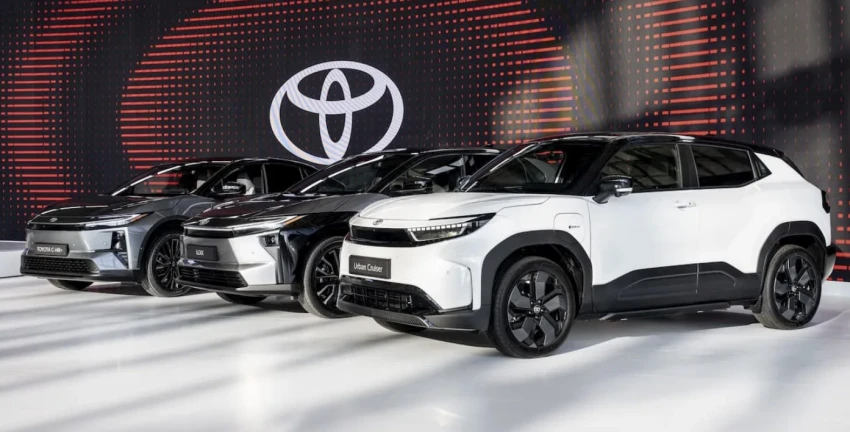
Amid the ongoing global surge in demand for new energy vehicles, Toyota Motor Corporation is accelerating its electrification strategy. According to a recent report by Nikkei, the world's largest automaker plans to increase its lineup of self-developed electric vehicles (EVs) to approximately 15 models by 2027-including several under the Lexus luxury brand-and boost annual EV production to one million units, seven times the output expected in 2024.
At present, Toyota has five self-developed EV models, which are manufactured exclusively in Japan and China. To enhance production capacity and strengthen its global supply response, the company intends to expand EV manufacturing to the United States, Thailand, and Argentina. This move is expected to lower logistics costs, reduce delivery times, and mitigate risks associated with tariffs and foreign exchange fluctuations.
Despite its steady expansion efforts, Toyota has recently revised its short-term EV production targets. Reports indicate that the company now forecasts production of approximately 800,000 EVs by 2026, significantly down from the previously announced target of 1.5 million units. Toyota clarified that these figures are provided as reference benchmarks for shareholders, rather than binding corporate goals.
In terms of EV sales, Toyota delivered nearly 140,000 electric vehicles globally in 2024, marking an increase of about one-third compared to the previous year. However, EVs accounted for less than 2% of Toyota's total global sales of over 10 million vehicles, indicating substantial room for growth in the company's transition to full electrification.
To accelerate product rollout and capacity expansion, Toyota is intensifying its global manufacturing footprint. The company will begin production of the Hilux electric pickup in Thailand this October, with additional production planned in Argentina. In the United States, Toyota will start manufacturing a new three-row all-electric SUV in 2026 at its plants in Kentucky and Indiana. Batteries for the model will be supplied by a newly built battery plant in North Carolina, which represents a $14 billion investment. Notably, this facility will also supply hybrid batteries to Honda.
According to market research firm GlobalData, global demand for EVs is projected to reach 31.76 million units annually by 2030-three times the volume in 2024-with EVs expected to account for over 30% of total vehicle sales. In response to this trend, Toyota is stepping up its strategic planning and production investments in a bid to solidify its position in the increasingly competitive global EV market.