
Why Choose Us?
1
Quality products: We have advanced production and testing equipment, and our products meet various standards.
2
Wide range of products: Our main products are Chassis parts, Suspension Parts, Engine parts, Electrical Parts, Body parts, such as brake pads, Spark Plugs, Bearings, Bushings, Power Steering Rack, Ball Joint, shock absorber, clutch cover&disc, vane pump, camshaft pulley, belt, tensioner pulley, ignition coil, fuel injector, auto sensor, power window switch, headlight, air cleaner and so on.
3
Reliable service: Our team is committed to providing reliable and consistent service, ensuring that you receive high-quality products and customer support from us every time.
4
Professional team: The company is in possession of numbers of senior engineers and has abundant technique power, well conditioned equipment and technology comes to perfection.
-

Mercedes-Benz VITO/VIANO 03-13 Steering Rack Replacement ...
Product Name:Steering gear. OEM No.: 6394601000. Compatibility: Specifically designed for Mercedes models Add to Inquiry -
Hyundai Elantra HD And I30 Steering Rack Replacement 5770...
Product Name:Steering gear. OEM No.: 577001Z000. Compatibility: Specifically designed for Kia models Add to Inquiry -
Nissan E26 NV350 Steering Rack Replacement 490013XT0A Pow...
Product Name:Steering gear. OEM No.: 490013XT0A. Compatibility: Specifically designed for Hyundai models Add to Inquiry -
Car Accessories Power Steering Rack Repair Kit For 56500-...
Product Name:Steering gear. OEM No.: 56500-2K000. Compatibility: Specifically designed for Hyundai models Add to Inquiry -
Car Accessories Power Steering Rack Repair Kit For 56500-...
Product Name:Steering gear. OEM No.: 56500-0X000. Compatibility: Specifically designed for Hyundai models Add to Inquiry -
Car Accessories Power Steering Rack Repair Kit For 49001-...
Product Name:Steering gear. OEM No.: 49001-ZH50A. Compatibility: Specifically designed for Nissan models Add to Inquiry -
High Quality Power Steering Rack For Suzuki Vitara SX4 S-...
Product Name:Steering gear. OEM No.: 48580-54P51. Compatibility: Specifically designed for Suzuki models Add to Inquiry -
High Quality Power Steering Rack For Toyota COROLLA ZZE12...
Product Name:Steering gear. OEM No.: 44250-12670. Compatibility: Specifically designed for Toyota models Add to Inquiry -
High Quality Power Steering Rack For Toyota Corolla Ae100...
Product Name:Steering gear. OEM No.: 44250-01020. Compatibility: Specifically designed for Toyota models Add to Inquiry -
4410A769 Power Steering Rack Assy For MITSUBISHI Xpander ...
Product Name:Steering gear. OEM No.: 4410A769. Compatibility: Specifically designed for Mitsubishi models Add to Inquiry -
4410A603 Power Steering Rack Assy For MITSUBISHI L200 Tri...
Product Name:Steering gear. OEM No.: 4410A603. Compatibility: Specifically designed for Mitsubishi models Add to Inquiry -
4410A498 Power Steering Rack Assy For MITSUBISHI Mirage P...
Product Name:Steering gear. OEM No.: 4410A498. Compatibility: Specifically designed for Mitsubishi models Add to Inquiry

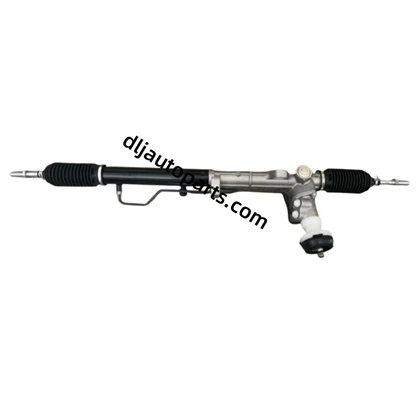


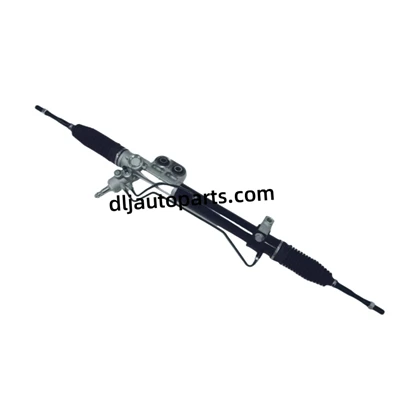


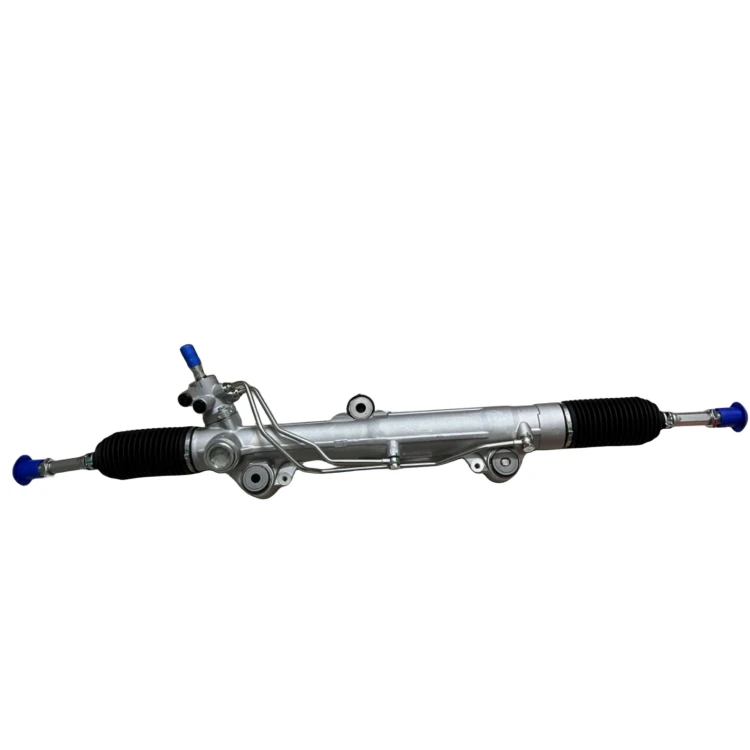
What Is Steering Gear?
Steering gear refers to the system of components that couples the steering wheel to the steering linkage of a motor vehicle, allowing the driver to control the direction of the vehicle by turning the steering wheel. It typically consists of a steering box, steering column, and various linkages and joints that transmit the rotational motion of the steering wheel to the wheels of the vehicle, causing them to turn and thereby change the direction of travel.
Advantages of Steering Gear
Firstly, steering gear provides key advantages precise control over the direction of of steering the vehicle gear
Ease of maneuverability
Steering gear enhances the maneuverability of vehicles, making it easier to navigate tight spaces, make of the vehicle. Whether it's making sharp turns or parking in tight spaces, a well-functioning steering gear system allows drivers to have better control over the vehicle's movements. This not only makes driving more convenient but also enhances overall driving experience.
Improved safety
A well-functioning steering gear system is with advanced features such as power essential for ensuring the safety of passengers and steering, operators. It allows for quick which reduces the effort required to turn the wheel. This makes driving more comfortable, especially during long journeys or when navigating through heavy traffic.
Enhanced comfort
Steering gear systems are designed to provide a comfortable driving or sailing experience by reducing vibrations and shocks that may be, steering gear contributes to overall vehicle efficiency by ensuring transferred to the steering wheel.
Efficient handling
Steering gear contributes to efficient handling of vehicles by allowing drivers that the wheels are properly aligned and reducing tire wear. Proper alignment helps maintain fuel efficiency and prolongs the lifespan of tires, ultimately saving on maintenance costs.
The Role of Car Steering Servo
The car steering servo is the core component of the car steering system, mainly used to control the steering angle and steering force of the car. Its functions mainly include:
Increased steering force
The car steering servo adjusts the steering assist through an electric or hydraulic system, greatly reducing the force required by the driver during steering, improving driving comfort and maneuverability.
01
Steering angle control
The car steering servo receives the steering command from the driver and converts it into corresponding output signals to control the vehicle's steering angle. Through precise control of the servo, the driver can easily and accurately steer the vehicle to the desired angle, improving driving safety.
02
Anti-lock braking system (ABS)
The car steering servo is also used in the operation of the anti-lock braking system. During emergency braking, the ABS adjusts the steering angle of the wheels through the servo to keep the vehicle in the best braking state, avoiding tire slip and loss of control.
03
Zero point return function
The car steering servo usually has a zero point return function, that is, after the steering operation is completed, the servo will automatically return to the neutral position, maintaining the vehicle's straight driving state.
04
Support for active safety systems
Some advanced driver assistance systems, such as Adaptive Cruise Control (ACC) and Lane Keeping Assist System (LKAS), require the support of the steering servo to achieve automated steering control.
05
How Does Steering Gear Affect Vehicle Handling?
Steering gear plays a crucial role in determining the handling characteristics of a vehicle. The steering gear is responsible for translating the driver's input from the steering wheel into the movement of the vehicle's front wheels. There are several ways in which the steering gear can affect vehicle handling:
Precision
The precision of the steering gear directly impacts how accurately a driver can place a vehicle on the road. A well-engineered steering system will allow for precise control over small adjustments in direction, making it easier for drivers to navigate tight corners or obstacles. In contrast, a loose or imprecise steering gear may result in sloppy handling and difficulty maintaining a desired line through curves.
Responsiveness
The type of steering gear used in a vehicle can greatly affect its responsiveness. A well-designed steering gear will provide precise and immediate response to the driver's input, allowing for quick and accurate changes in direction. On the other hand, a poorly designed steering gear may feel sluggish or unresponsive, leading to imprecise handling.
Stability
The steering gear also plays a role in determining the stability of a vehicle. A properly calibrated steering gear will help maintain stability at high speeds and during sudden maneuvers, keeping the vehicle firmly planted on the road. In contrast, a faulty or poorly adjusted steering gear can lead to instability, causing the vehicle to feel wobbly or difficult to control.
Feedback
Good steering gear provides feedback to the driver about road conditions and tire grip through the steering wheel. This feedback is crucial for the driver to understand how much traction is available and how close the vehicle is to its limits of adhesion. Insufficient feedback can make it difficult for the driver to gauge how much input is needed, leading to oversteer or understeer situations.
How Do You Drive Steering Gear?
To drive steering gear, you are actually referring to how the driver operates the steering wheel to control the direction of the vehicle. Here's a brief overview of how the steering gear is driven:
The driver turns the steering wheel in the desired direction. The steering wheel is typically connected to a steering column, which transmits the rotational motion of the wheel to the steering gear box.
The steering gear box converts the rotational motion of the steering wheel into linear motion. Depending on the type of steering gear, this conversion may involve gears, racks, and pinions, or other mechanical devices.
The linear motion is then transmitted through a series of linkages and joints to the steering linkage, which is connected to the wheels of the vehicle. The linkage converts the linear motion back into rotary motion to turn the wheels in the desired direction.
The wheels, when turned, change the direction of travel of the vehicle, allowing the driver to navigate curves, turns, and other road conditions.
It's important to note that the steering gear is designed to provide a smooth and responsive feel to the driver, allowing for precise control of the vehicle's direction. The steering effort required to turn the wheel is balanced to ensure ease of operation, and the steering gear is also equipped with safety features such as power steering to assist the driver in turning the wheel, especially at low speeds or when the vehicle is stationary.
What Are the Phenomena of Abnormal Car Steering Servo?
There are many possible symptoms of a faulty car steering servo, and the specific situation may vary depending on the specific cause and type of the malfunction. Here are several possible symptoms:
The steering wheel becomes heavy: The steering wheel cannot be turned as easily as normal and requires more force to control the direction of the vehicle.
Steering wheel drift: While driving, the steering wheel automatically deviates in a certain direction and needs to be corrected to maintain the correct driving direction.
Steering wheel vibration: While driving, the steering wheel shakes up and down or left and right, possibly accompanied by a bumpy feeling of the vehicle.
Steering wheel unresponsiveness: When turning the steering wheel, the vehicle's steering response is slower than usual, and the control is not as agile as before.
Continual automatic rotation of the steering wheel: The steering wheel will rotate automatically without the need for driver control.
Features of Steering Gear
Turning ratio: The steering gear turns the wheels of the vehicle in accordance with the driver's intentions. The turning ratio of the system is critical to ensure that the wheels turn smoothly and with the right degree of accuracy.
Gear ratio: The gear ratio determines the degree of steering wheel rotation needed to turn the wheels by a certain degree. A higher gear ratio means that the steering wheel needs to be turned more to achieve a certain degree of wheel turn.
Power assistance: Many modern steering systems incorporate hydraulic or electric power assistance to make steering easier, especially at lower speeds. The amount of assistance provided by the system can be adjusted to suit the driving conditions.
Centering mechanism: The steering gear should automatically return to its center position when the driver releases the steering wheel. This is achieved through the use of centering mechanisms such as springs or hydraulics.
Rack and pinion: Most modern steering systems use a rack and pinion mechanism to translate the rotational movement of the steering wheel into linear motion of the wheels. This mechanism is simple, reliable, and provides precise control over the steering.
Steer-by-wire: Some modern steering systems are fully electronic and use sensors, motors, and electronic control units to adjust the steering. This provides even greater precision and control over the steering, but requires more complex electronics.
Durability: The steering gear should be designed and built to withstand the rigors of use over many years without failure. This includes resistance to wear and tear, corrosion, and impact damage.
How to Maintain Steering Gear?
01/
Check the steering fluid level and condition: The steering gear operates using a special fluid, typically power steering fluid. Check the fluid level regularly and ensure it's within the recommended range. Also, inspect the fluid for any contamination or discoloration, which could indicate a problem. If the fluid is dirty or has debris in it, it should be flushed and replaced.
02/
Lubricate components: Steering gear components require lubrication to reduce friction and wear. Apply the recommended lubricants to the appropriate parts, such as the steering box, linkages, and joints. Be sure to follow the manufacturer's recommendations for the type and frequency of lubrication.
03/
Inspect steering components for wear and damage: Regularly inspect the steering gear components for wear, damage, or cracks. This includes the steering box, linkages, joints, and steering wheel itself. If any components are damaged or worn, they should be repaired or replaced as necessary.
04/
Tighten loose connections: Over time, steering gear connections may loosen due to vibration and wear. Check the connections between the steering wheel, steering column, steering box, and linkages, and tighten any that are loose. Use the appropriate tools and follow the manufacturer's torque specifications.
05/
Perform regular alignments: Regular alignments help ensure that the steering gear is properly aligned with the wheels and suspension system. This is important for optimal handling and tire wear. Have your vehicle aligned according to the manufacturer's recommendations.
06/
Replace worn parts: If any steering gear components are found to be worn or damaged, they should be replaced with new or rebuilt parts. Using worn parts can lead to decreased performance and increased wear on other components.
3 Critical Components in a Power Steering System
In the old days of automobiles, steering a car took a lot of upper-body strength. To turn the wheels, you had to wrestle with the entire weight of your steering system. Today, fortunately, steering takes a lot less effort thanks to the advent of power steering systems. Power steering uses hydraulic force to greatly reduce the amount of effort needed to turn your wheels.
Unfortunately, the added complexity of a power steering systems means more things can go wrong with your car. Yet those who understand how a power steering system works stand a better chance of recognizing common problems. This article takes a look at three critical yet easily overlooked components in your power steering system.
The pump
The power steering pump's job is to pressurize the hydraulic fluid. Inside of the power steering pump lies a rotor equipped with vanes around perimeter. As the rotor spins, it pulls power steering fluid out of the reservoir, increasing its pressure. This pressurized fluid then travels on to the steering rack, where it enables the appropriate movement.
Power steering pumps also contain a special pressure-relief valve to ensure that system pressure never becomes too high. Excessive pressure could easily damage the rotor or other internal components.
The pump pulley
Like a multitude of other components beneath your hood, the power steering pump receives its own power from your car's engine. The key intermediary between engine and pump goes by the name of the pump pulley. The pump pulley attaches to the engine's crankshaft by means of a special belt; as the crankshaft rotates, so does the pulley.
A second belt then passes this rotational force on to the pump itself. Without a working pulley, your power steering system cannot do its job. Over time, the belts used by the pulley system often become worn and stretched. Such belts can no longer effectively transmit force. As a result, you may find that your power steering becomes choppy or fails to respond altogether.
The rotary valve
Your power steering system doesn't need to engage at all times. When you travel down the road in a straight line, without exerting any force on the steering wheel, the power steering system remains idle. Yet the moment you turn your steering wheel, the system must instantly respond.
The component known as the rotary valve has the important job of sensing any force applied to your steering wheel. Furthermore, the valve also directs the flow of hydraulic fluid to the appropriate side of the power steering system, depending on the direction of your turn.
The rotary valve monitors steering position by means of an internal part called the torsion bar. This thin metal transmits any torque exerted on the steering wheel to the rotary valve. The torsion bar not only tells the valve the direction of the turn but also how hard you are turning.
How to Choose Steering Gear?
Understand the types of steering gear: There are different types of steering gear available, such as rack and pinion, recirculating ball, and power steering. Each type has its own advantages and disadvantages, so it's important to understand how they work and which one is best suited for your vehicle.
Consider your driving needs: Think about how you use your vehicle on a daily basis. If you do a lot of city driving with frequent turns and parking maneuvers, a responsive steering gear like rack and pinion may be more suitable. On the other hand, if you do a lot of highway driving or off-road adventures, a more robust steering gear like recirculating ball may be better.
Check compatibility: Make sure that the steering gear you choose is compatible with your vehicle's make and model. Different vehicles may require different types of steering gears, so it's important to check with your manufacturer or a professional mechanic to ensure compatibility.
Consider power steering: Power steering can make driving much easier by reducing the effort required to turn the wheel, especially at low speeds or when parking. If you prefer a smoother and more effortless driving experience, consider opting for power steering.
Seek professional advice: If you're unsure about which steering gear to choose or how to install it properly, don't hesitate to seek advice from a professional mechanic or automotive expert. They can provide valuable insights based on your specific needs and help you make an informed decision.
What Are the Common Problems with Steering Gear?
Troubleshooting common steering gear issues is crucial for ensuring the safety and efficiency of a vehicle. Steering gear problems can range from simple issues that can be fixed at home to more complex ones requiring professional attention. Here's a guide to help you troubleshoot some common steering gear issues:
Stiff steering
● Check the power steering fluid: Low levels of power steering fluid are a common cause of stiff steering. Check the fluid level and top it up if necessary.
● Inspect the power steering belt: A loose or worn belt can lead to inefficient power steering pump operation, causing stiff steering. Adjust or replace the belt as needed.
● Power steering pump: If the fluid level and belt are fine, the problem might be with the power steering pump itself. It may require professional diagnosis and repair.
Noisy steering
● Low power steering fluid: Low fluid can cause the power steering pump to make noise. Check and refill the power steering fluid if it's low.
● Air in the power steering system: Air trapped in the system can also cause noise. Bleeding the system to remove air may resolve this issue.
● Worn or damaged components: Worn out bearings, couplings, or belts can also lead to noisy steering. Inspect these components and replace them if necessary.
Leaking power steering fluid
● Inspect hoses and connections: Check for any loose or damaged hoses and connections that might be leaking power steering fluid. Tighten or replace as needed.
● Check the power steering pump seal: A damaged seal on the pump could be causing leaks. It may need to be replaced by a professional.
● Steering gear housing: Cracks or damage to the steering gear housing itself could lead to leaks, requiring professional repair.
Unresponsive steering
● Check for loose components: Loose tie rods or worn steering linkage can lead to unresponsive steering. Inspect these components and tighten or replace as necessary.
● Power steering fluid level and quality: Ensure that not only is there enough fluid, but also that it's not contaminated. Contaminated fluid needs to be replaced.
● Steering gear adjustment: Some systems allow for adjustments to reduce play in the steering gear; however, this should be done with caution and preferably by professionals.
Vehicle pulling to one side
● This issue often stems from tire pressure discrepancies, alignment issues, or uneven tire wear rather than directly from the steering gear itself but should not be ignored as it could indicate underlying problems affecting vehicle handling.
Preventive measures
Regular maintenance is key in preventing many of these issues:
● Regularly check and maintain proper levels of power steering fluid.
● Inspect belts, hoses, and connections periodically for signs of wear or damage.
● Ensure your vehicle's alignment is checked at least annually.
If after these troubleshooting steps your issue persists, it may be time to consult with a professional mechanic who specializes in vehicle steering systems for further diagnosis and repair.

Our Factory
Guangzhou Delijia Auto Parts Co., Ltd located in Guangzhou, China.
Our main products are Chassis parts, Suspension Parts, Engine parts, Electrical Parts, Body parts, such as brake pads, Spark Plugs, Bearings, Bushings, Power Steering Rack, Ball Joint, shock absorber, clutch cover&disc, vane pump, camshaft pulley, belt, tensioner pulley, ignition coil, fuel injector, auto sensor, power window switch, headlight, air cleaner and so on.
FAQ
Q: What is the main purpose of steering gear?
A: The steering gear provides a movement of the rudder in response to a signal from the bridge through the control equipment, which conveys the rudder ordered signal from the bridge and activates the steering gear to move the rudder to the desired angle.
Q: Which gear is used in steering?
A: Most car-based vehicles use rack-and-pinion steering in which the steering wheel turns a pinion gear that moves on a rack to turn the front wheels.
Q: What are the 2 types of steering boxes?
A: There are two main types of steering gears used for most modern vehicles: the rack and pinion steering gear and the recirculating ball steering gear.
Q: What is the single failure steering gear?
A: The single failure concept is a vital safety principle in ship design and operation, specifically pertaining to the steering gear. It mandates the presence of redundant systems, ensuring that even if one component of the steering system fails, there are alternative mechanisms in place to maintain control of the ship.
Q: How steering is connected to the wheel?
A: The steering wheel has a shaft attached to it and on the other end of the shaft is the pinion. The pinion is positioned on top of the rack and moves when the steering wheel is moved. The end of the rack has something called a tie rod. The tie rods connect to the steering arm which in turn is connected to the wheel hub.
Q: What does steering consist of?
A: The steering system of your car is everything from the steering wheel to the steering shaft, rack and pinion (also known as the gearbox), all the way to the linkage which connects to the wheels themselves.
Q: What controls power steering?
A: An engine-driven accessory drive or serpentine belt turns on the pump and directs high-pressure power steering fluid via the high-pressure hose to the input side of the power steering gear-control valve. High pressure acting on the control valve assists the driver when turning the front wheels.
Q: What are the advantages of steering gear?
A: The steering gearbox multiplies the driver's effort and provides a mechanical advantage, making it easier to turn the wheels and control the vehicle's direction. It is particularly crucial in larger vehicles, where the wheels may require more force to turn due to their weight and size.
Q: Is power steering gear driven?
A: First, heavy duty power steering components are much larger in size than light duty parts. This should be the most easily identifiable difference between pumps and gears for light and heavy classes. Heavy duty pumps are gear driven, as opposed to light duty parts, which are belt driven.
Q: Is a steering gear a rack and pinion?
A: The rack and pinion gear assembly is the central component of the rack and pinion steering system. The steering system in vehicles is responsible for enabling the driver to control the wheels' direction. It comprises various components, including the steering wheel, steering column, steering gear, and tie rods.
Q: Which is better rack and pinion or steering gear?
A: Steering gear boxes typically have more components, which makes them heavier. They're also more difficult to handle. If you want a steering system that's durable, straightforward, and lightweight, rack and pinion is the way to go. You'll get better handling and fuel economy.
Q: What is the name of the arm that connects to the steering gear box?
A: In automotive or truck steering systems, the Pitman arm acts as a linkage attached to the steering box (see recirculating ball) sector shaft, it converts the angular motion of the sector shaft into the linear motion needed to steer the wheels.
Q: How long do steering gears last?
A: Some signs that your steering gearbox needs to be repaired or replaced are increased or jerky steering and the steering becoming loose and showing excessive play. For most vehicles, the power steering system will last well over 100,000 miles before any failures occur.
Q: Can you drive with bad steering gear?
A: This is dangerous to drive because you cannot make proper changes to the car trajectory as you desire. An unresponsive steering is usually a result of wear and tear on the steering rack. It will require some special tools and technical know-how to repair.
Q: What does a rack and pinion do?
A: The rack and pinion gear set has two main functions: Conversion of the steering wheel's rotational motion into the linear motion needed for the vehicle's wheels to turn. Reduction of gears, which makes it easier for the steering wheel to turn the wheels.
Q: How does the steering wheel get out of line?
A: There are plenty of things which 'undo' your wheel alignment. Potholes, rough roads and driving, basic wear and tear, speed bumps or hitting the curb when you park can all affect your cars.
Q: What controls the tires?
A: The steering system converts the rotation of the steering wheel into a swivelling movement of the road wheels in such a way that the steering-wheel rim turns a long way to move the road wheels a short way.
Q: Where are steering system found?
A: The steering wheel is attached to a steering column, which is linked to rods, pivots and gears that allow the driver to change the direction of the front wheels. Other arrangements are sometimes found on different types of vehicles; for example, a tiller or rear-wheel steering.
Q: How do you inspect a steering system?
A: Raise the vehicle and check for excessive play, travel, binding, wear or damage to all steering components. Don't forget to inspect steering wheel freeplay for excessive travel. If a ball joint has a wear indicator, check to see if it's recessed into the housing, indicating the need for replacement.
Q: What happens when power steering pump goes out?
A: This could be accompanied by a stiff wheel that is harder to turn at times or is slow to respond when you begin a turn. A bad power steering pump may even cause your vehicle to emit a squealing sound when you turn the key in the ignition.
We're well-known as one of the leading steering gear suppliers in China. Please feel free to wholesale high-grade steering gear in stock here from our factory. All customized products are with high quality and competitive price.
brake shoe for toyota, Brake pads for toyota, denso sk20r11