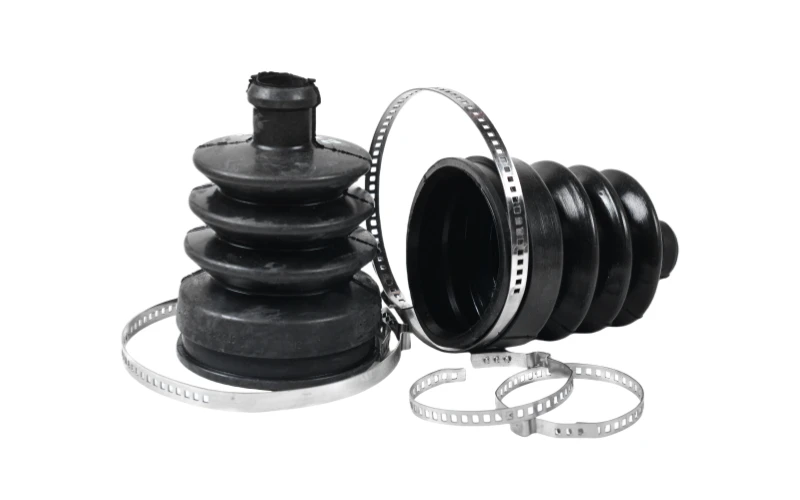
1. What Are C.V. Joints Boots?
C.V. Joints Boots, commonly referred to as Constant Velocity (CV) Joint Boots, are essential components designed to protect the C.V. Joints from external contaminants and damage. C.V. Joints themselves are found in front-wheel-drive and four-wheel-drive vehicles, where they transmit power to the wheels during steering and suspension movements. The boots, made from durable rubber or plastic, shield these joints from dust, water, salt, and other pollutants, ensuring a longer lifespan for the CV joints.
2. What Is the Structure and Material of C.V. Joints Boots?
C.V. Joints Boots are generally composed of two parts:
- Outer C.V. Boot: Located near the wheels, this part must endure greater flexing and vibrations, which is why it's typically made of highly elastic, temperature-resistant rubber.
- Inner C.V. Boot: Positioned near the transmission, this boot is primarily made of oil-resistant, chemical-resistant materials to protect the drivetrain.
The materials most commonly used include synthetic rubber (like neoprene) or thermoplastic elastomers (TPV), both known for their excellent abrasion resistance and durability against extreme weather and temperatures.
3. What Are the Functions of C.V. Joints Boots?
The primary roles of C.V. Joints Boots include:
- Preventing contamination: CV joints are susceptible to dust, water, and salt ingress. The boots act as a protective seal, shielding the joints from contaminants.
- Maintaining lubrication: The grease inside the CV joints is crucial for smooth operation, and the boots help retain this grease, preventing leaks.
- Extending service life: By preventing contamination and maintaining lubrication, C.V. Joints Boots significantly prolong the lifespan of the CV joints, minimizing the need for repairs or replacements.
4. Where Are C.V. Joints Boots Used?
C.V. Joints Boots are most commonly used in front-wheel-drive and four-wheel-drive vehicles. They connect the transmission to the wheels via drive shafts, ensuring efficient power transfer. These boots are found in a variety of vehicles, particularly SUVs, pickup trucks, and passenger cars.
5. What Are Common Issues With C.V. Joints Boots and How Can They Be Maintained?
Due to exposure to harsh environments, C.V. Joints Boots may experience several issues:
- Cracks and tears: The constant movement from steering and suspension, along with environmental exposure, can cause cracks, allowing contaminants to enter the joints.
- Grease leakage: A damaged boot can cause grease to leak, leading to a loss of lubrication, which may result in noise and stiffness in the CV joint.
Maintenance tips:
- Regular inspections: It is recommended to inspect C.V. Joints Boots during each service or tire change for signs of damage.
- Immediate replacement: If damage is found, replace the boot promptly to avoid damage to the CV joint.
6. How Are C.V. Joints Boots Replaced?
- Remove the tire: First, the vehicle is lifted, and the wheel is removed to access the CV joints.
- Remove the old boot: The damaged boot and retaining clips are removed, and the area is cleaned.
- Install the new boot: A new boot is fitted, fresh grease is applied, and the boot is secured with new retaining clips.
7. Why Are C.V. Joints Boots Important?
C.V. Joints Boots play a vital role in maintaining the health of the drivetrain by protecting the CV joints from contaminants and ensuring proper lubrication. Regular maintenance and inspection of the boots are crucial to ensure smooth vehicle operation and extend the life of the drivetrain system.