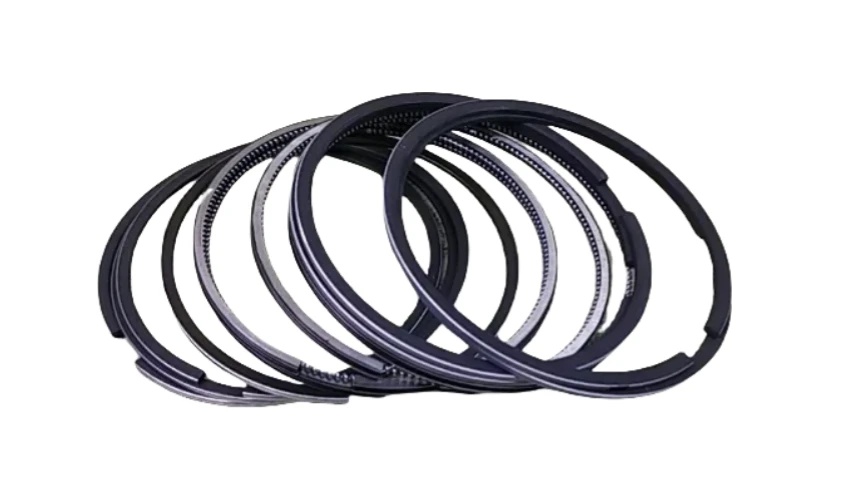
Piston and Ring Set is one of the core components of an internal combustion engine, primarily consisting of the piston and piston rings. They play a crucial role in the operation of the engine by converting the chemical energy of fuel into mechanical energy and ensuring the normal operation of the engine.
1. Main Functions
- Sealing the Combustion Chamber: The piston rings tightly fit against the cylinder wall to prevent combustion gases from leaking, maintaining a high-pressure environment within the combustion chamber.
- Controlling Oil Consumption: The oil ring scrapes excess oil, ensuring effective lubrication while preventing oil from entering the combustion chamber, thereby reducing oil consumption.
- Heat Transfer: The piston rings help transfer heat generated by the piston to the cylinder wall, preventing the piston from overheating.
- Reducing Friction: The friction between the piston and the cylinder wall is controlled by the piston rings, reducing wear and extending the engine's lifespan.
2. Applications
Piston and Ring Set is widely used in various internal combustion engines, including automobiles, motorcycles, trucks, and industrial equipment such as generators and marine engines. Whether used in high-performance vehicles or everyday cars, the design and material selection of pistons and piston rings are crucial for ensuring power transfer and operational efficiency.
3. Usage and Maintenance
- Proper Installation: The installation of piston rings must strictly follow the manufacturer's requirements to ensure proper gap and arrangement for maintaining good sealing performance.
- Regular Inspection: Wear and carbon buildup on piston rings can affect engine operation. It is recommended to regularly check and clean the pistons and ring grooves to prevent sealing issues and loss of power.
- Lubrication Maintenance: Sufficient lubrication with engine oil is key to reducing wear and preventing overheating. Regularly changing the oil and oil filter helps keep the engine clean and lubricated, effectively extending its lifespan.
4. Installation Process
Materials Needed:
- New piston and piston rings
- Piston ring gap gauge
- Lubricating oil (suitable for engine oil)
- Tools (torque wrench, piston ring compressor, cylinder brush, etc.)
Installation Steps:
1. Clean the Cylinder:
- Before installation, use a cylinder brush or cleaner to remove dirt and debris from the inside of the cylinder, ensuring a clean surface.
- Check the cylinder wall for scratches, wear, or other damage. If any issues are found, repair or replace the cylinder as necessary.
2. Inspect the Piston and Piston Rings:
- Ensure that the piston and piston rings match the engine model and are undamaged.
- Check the orientation and gap of the piston rings according to the manufacturer's instructions.
3. Install the Piston Rings:
- Gently install the piston rings onto the piston, ensuring the gaps are evenly spaced, typically around 90 degrees apart (specific requirements may vary by manufacturer).
- Use a piston ring compressor to compress the piston rings to the appropriate diameter for insertion into the cylinder.
4. Lubricate the Piston and Cylinder:
- Apply a suitable amount of engine oil to the working surface of the piston and the piston rings for initial lubrication.
- Oil can also be applied to the cylinder wall to reduce friction during installation.
5. Install the Piston into the Cylinder:
- Slowly and carefully insert the compressed piston into the cylinder, ensuring the piston markings (usually "front" or "up") are facing the correct direction.
- Use a suitable tool (like a wooden hammer) to gently tap the bottom of the piston, ensuring it is fully seated in the cylinder.
6. Secure the Piston Connecting Rod:
- Align the piston connecting rod, ensuring the rod hole is aligned with the crankshaft main shaft.
- Install the connecting rod bolts and secure them with a torque wrench according to the manufacturer's specified torque.
7. Check Piston Movement:
- Gently rotate the crankshaft by hand to ensure the piston moves freely up and down in the cylinder without any sticking.
8. Final Inspection:
- Check that the piston ring gaps and positions meet the required specifications and ensure there are no loose or misaligned components after installation.
- Ensure that all connecting parts and bolts are properly tightened.
Notes:
- Avoid applying excessive force to the piston rings during installation to prevent deformation or breakage.
- Ensure a clean working environment to avoid dust or debris entering the cylinder.
- Follow the manufacturer's manual and guidelines to ensure correct installation.
5. Common Issues
- Piston Ring Wear: Over time, piston rings may wear down, leading to a loss of combustion chamber sealing, which can result in reduced power and increased oil consumption.
- Piston Ring Sticking: Carbon buildup or degraded oil may cause piston rings to stick, affecting sealing performance and engine efficiency.
- Piston Damage or Overheating: Pistons may suffer from overheating or damage due to poor lubrication or inadequate cooling, leading to decreased engine performance.
- Improper Gaps: Gaps that are too large or too small between the piston rings and the cylinder wall can lead to sealing problems or increased friction, affecting normal engine operation.
- Carbon Buildup on Piston Top: Carbon buildup can affect combustion efficiency, leading to engine vibration, reduced power, and increased fuel consumption.
6. Selection Guidelines
When choosing a Piston and Ring Set, consider the following factors:
- Material: Aluminum pistons are lightweight and have good thermal conductivity, suitable for high-performance vehicles, while cast iron pistons offer better wear resistance for heavy-duty applications.
- Specifications: The size of the piston and piston rings must match the engine to ensure optimal performance and lifespan.
- Brand and Quality: Choose products from reputable brands to ensure wear resistance, sealing ability, and high-temperature resistance, thereby improving engine efficiency and reliability.