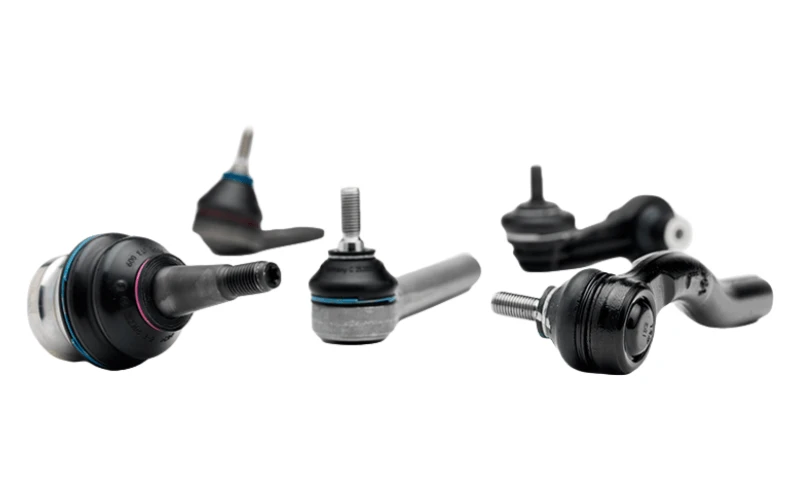
Car Tie Rod Ends: How They Work
Car tie rod ends play a critical role in the steering system of vehicles. They connect the steering rack (or center link) to the steering knuckles, enabling the driver to control the direction of the vehicle. Here's how they function:
- Connection and Movement: Tie rod ends are located at the ends of the tie rods. One end connects to the steering rack through a threaded connection, while the other end connects to the steering knuckle with a ball and socket joint. This design allows for rotational movement in multiple directions, crucial for steering.
- Steering Action: When the steering wheel is turned, it rotates the steering column, which in turn rotates the steering rack or center link. This rotational movement is transmitted through the tie rods to the tie rod ends. As the tie rod ends rotate, they push or pull the steering knuckles, causing the wheels to turn left or right.
- Adjustability and Maintenance: The threaded connection on the inner end of the tie rod allows for adjustment of the tie rod length. This adjustment is essential for proper wheel alignment, ensuring even tire wear and stable handling. Regular inspection and maintenance of tie rod ends are necessary to prevent steering issues and maintain vehicle safety.
Signs of Bad Tie Rod Ends
Detecting bad tie rod ends is crucial for maintaining safe steering and vehicle operation. Here are common signs of worn tie rod ends:
- Loose Steering: Excessive play or looseness in the steering wheel when turning, especially noticeable when changing directions or driving over bumps.
- Uneven Tire Wear: Worn tie rod ends can cause uneven tire wear. Check for smooth patches or irregular patterns on the inside or outside edges of the tires.
- Vibration or Shaking: A vibration or shaking sensation in the steering wheel, particularly at higher speeds or during acceleration.
- Clunking Noises: Clunking or knocking noises from the front of the vehicle when turning or going over bumps.
- Alignment Issues: Vehicle pulling to one side or the steering wheel not returning to center after turning.
How to Replace Tie Rod Ends
Replacing tie rod ends requires some mechanical skill and the right tools. Here's a step-by-step guide:
Tools and Materials Needed:
- Jack and jack stands or ramps
- Lug wrench or impact wrench
- Penetrating oil (e.g., WD-40)
- Tie rod end separator tool (pickle fork or ball joint separator)
- Adjustable wrench or appropriate-sized socket and ratchet
- Torque wrench
- New tie rod ends
- Grease gun (if tie rod ends have grease fittings)
- Hammer
Steps to Replace Tie Rod Ends:
1. Prepare the Vehicle:
Park on a flat surface, engage the parking brake, and loosen the lug nuts on the front wheels.
2. Lift and Secure the Vehicle:
Lift the front of the vehicle and secure it on jack stands or ramps.
3. Remove the Wheel:
Remove the front wheel to access the tie rod end.
4. Remove the Cotter Pin and Nut:
Remove the cotter pin and loosen the castle nut securing the tie rod end to the steering knuckle.
5. Separate the Tie Rod End:
Use a tie rod end separator tool to disconnect the tie rod end from the steering knuckle.
6. Remove the Tie Rod End:
Unscrew the outer tie rod end from the inner tie rod, counting the number of turns for installation reference.
7. Install the New Tie Rod End:
Apply grease to the threads if applicable and screw on the new tie rod end using the recorded number of turns.
8. Attach the Tie Rod End to the Steering Knuckle:
Insert the new tie rod end into the steering knuckle and secure with the castle nut. Torque to manufacturer specifications and install a new cotter pin.
9. Reassemble and Test:
Reinstall the wheel, lower the vehicle, and torque the lug nuts to specifications.
Test drive the vehicle to ensure proper steering alignment and operation.
Additional Tips:
- Grease tie rod ends with grease fittings using a grease gun after installation.
- Consider getting a professional alignment after replacing tie rod ends to ensure proper steering geometry.
If you're unsure about performing this task yourself, consult a qualified mechanic for assistance to ensure safety and proper installation.