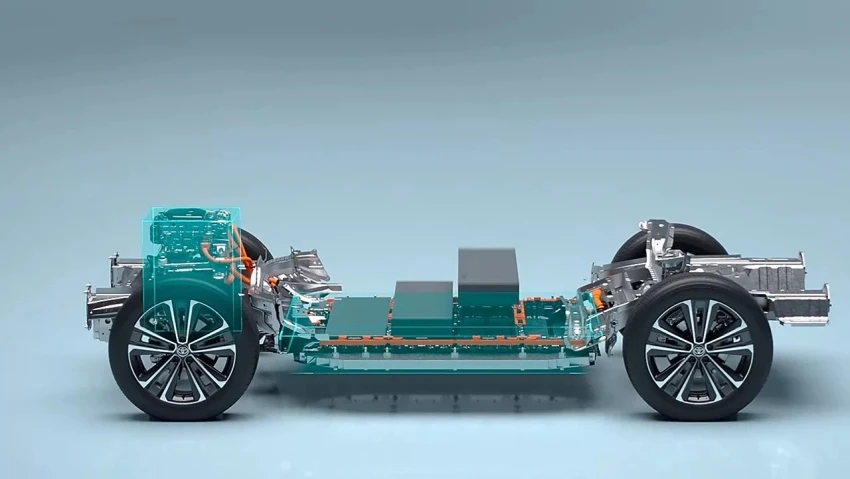
On February 5, Toyota Motor Corporation, the world's largest automaker, announced the official launch of its $14 billion electric vehicle (EV) battery plant in North Carolina. This marks a critical milestone in Toyota's electrification journey as it seeks to close the gap with industry leaders such as Tesla and BYD. At the same time, Toyota unveiled an ambitious plan to expand its presence in China by establishing a wholly owned subsidiary dedicated to the development and production of Lexus-branded EVs and batteries. These strategic moves reflect Toyota's intensified efforts to strengthen its position in the global EV market.
Located in North Carolina, Toyota Battery Manufacturing North Carolina (TBMNC) spans over 650,000 square meters-roughly the size of 121 football fields. The facility, which has been under development for more than three years, has now completed all pre-production preparations and is set to begin operations in April. It will produce batteries for Toyota's electric vehicles, plug-in hybrid electric vehicles (PHEVs), and hybrid vehicles, catering to the growing demand in North America. Toyota expects the plant to reach an annual production capacity of over 30 GWh once fully operational, making it a key hub for battery manufacturing in the region. In addition, the facility will create approximately 5,000 jobs, further boosting the local economy. As Toyota's 11th production facility in North America and its first wholly owned battery plant outside Japan, this investment underscores the company's commitment to building a localized EV supply chain in the region and accelerating the transition to sustainable mobility.
While expanding its footprint in North America, Toyota is also ramping up its strategic initiatives in China. On the same day, the company announced plans to establish a new subsidiary in Shanghai dedicated to the research, development, and production of Lexus electric vehicles and batteries. Toyota emphasized that this new entity will spearhead the planning and innovation of Lexus-branded EVs, positioning the company to better compete with leading domestic players such as BYD. Recognizing the critical role of China in its global electrification strategy, Toyota aims to "become a brand that is more loved and supported by Chinese consumers." The new subsidiary is expected to commence production after 2027, with an estimated annual capacity of around 100,000 vehicles. This move signals Toyota's deepening commitment to the Chinese market and reinforces Lexus's push toward electrification, particularly in the premium EV segment.
As the global automotive industry accelerates its shift toward electrification, major automakers are making aggressive investments in EV technology and production. While Tesla and BYD have rapidly gained market dominance, Toyota is now intensifying its efforts to catch up through strategic investments and organizational realignments. Whether in North America, where it is establishing a critical battery supply base, or in China, where it is driving Lexus's electric transformation, Toyota is taking decisive steps to strengthen its EV business. The road ahead remains competitive, and Toyota's ability to navigate this evolving landscape will ultimately determine its success. However, with its latest moves, Toyota has demonstrated an unprecedented commitment to electrification, signaling its ambition to play a leading role in the global EV market.