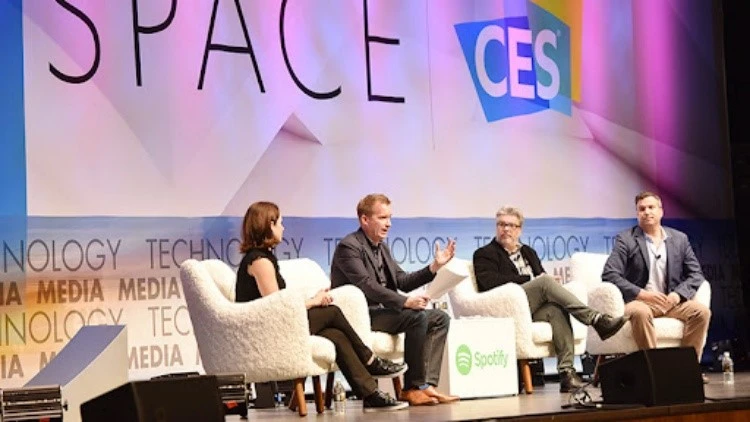
The 2025 Consumer Electronics Show (CES), a global tech extravaganza, opened on January 7 and will run until January 10 at the Las Vegas Convention Center in Nevada. As one of the largest and most influential technology events in the world, CES attracts innovative companies, industry leaders, and tech enthusiasts from around the globe each year to showcase cutting-edge products and trends. This year's show continues the tradition of highlighting technological breakthroughs, especially in areas such as artificial intelligence, smart homes, autonomous driving, and virtual reality, demonstrating how technology is shaping the future of mobility and lifestyle.
Among the prominent participants at this year's CES were global technology giants such as Toyota, Nvidia, and Continental, all showcasing their latest developments in the fields of smart transportation and autonomous driving. Toyota, for the first time at CES, displayed a prototype of an autonomous truck powered by the Aurora Autonomous System, supported by Nvidia and Continental's technologies. Akio Toyoda, Chairman of Toyota, emphasized that the company's interest in both rockets and autonomous driving technology is part of a broader strategy to innovate in the transportation sector. He hinted at Toyota's desire to compete with SpaceX, stating that the future of mobility should not be limited to Earth or just one car company. His remarks garnered significant attention, suggesting that the future of transportation will be more diverse, with tech companies expanding beyond the traditional automotive sector.
Autonomous driving technology took center stage with Nvidia's next-generation DRIVE Thor SoC platform. Nvidia's powerful AI platform continues to support the development of autonomous driving systems, and it is expected that the commercial deployment of autonomous trucks and passenger cars will accelerate in the coming years. Continental also showcased its latest breakthroughs in autonomous hardware, announcing plans to begin mass production in 2027, with the first batch of mass-produced samples set to launch in 2025. The core of this collaboration lies in integrating Nvidia's technology with Continental's manufacturing expertise, driving the industrialization of autonomous hardware. As autonomous driving technology matures, the global automotive industry's competitive landscape is poised for significant changes.
In addition to autonomous driving, artificial intelligence (AI) technology was another major highlight at CES. The exhibition featured a variety of AI-driven smart home products and devices, including smart speakers, robotic assistants, and connected home appliances. These products not only make homes more intelligent but also provide users with a more efficient and convenient experience. Especially with the advancement of 5G networks, the interconnectivity of smart homes has significantly improved, allowing users to control a wide range of household devices more flexibly and enjoy more personalized services.
AI's application across various industries was also a key theme at CES this year. Several companies showcased AI-powered health monitoring devices, smart medical diagnostic systems, and automated production lines. These technologies are expected to greatly improve work efficiency, reduce costs, and transform the operational models of traditional industries. In healthcare, AI technology is helping doctors make more accurate diagnoses, thereby increasing the success rate of treatments. In manufacturing, AI is driving the adoption of smart manufacturing and automation, providing a powerful impetus for the transformation and upgrading of the global manufacturing industry.
Green technology and sustainability were also significant topics at this year's CES. With the growing global emphasis on environmental protection, more and more companies are focusing on the development and application of eco-friendly technologies. Several electric vehicles, smart energy management systems, and clean energy technologies were showcased, demonstrating how tech companies are driving the realization of sustainability goals through innovation. In particular, in the fields of transportation and energy, electrification and intelligence will be key directions for future development, reducing carbon emissions and improving energy efficiency will be common goals for global tech companies.
The 2025 CES not only displayed the latest global technological achievements but also deepened collaboration and exchange among tech companies worldwide. As intelligent technologies continue to develop, companies from various countries are working together to drive technological innovation and industry upgrades, welcoming a more intelligent, green, and interconnected future society. During the event, many companies promoted global tech industry collaboration through joint product launches, sharing technical ideas, and holding panel discussions. It is expected that in the coming years, with breakthroughs in technologies such as 5G, AI, and the Internet of Things, the global tech industry will experience unprecedented transformations.
Overall, the 2025 CES not only showcased the innovations in the global tech industry but also provided a platform for global companies to exchange and collaborate. The many products and technologies highlighted at the event demonstrated how technology will continue to change the way we travel, live, and work. With the rapid progress of technology, life in the future will become increasingly intelligent, green, and digital, further driving the transformation and upgrading of the global economy.