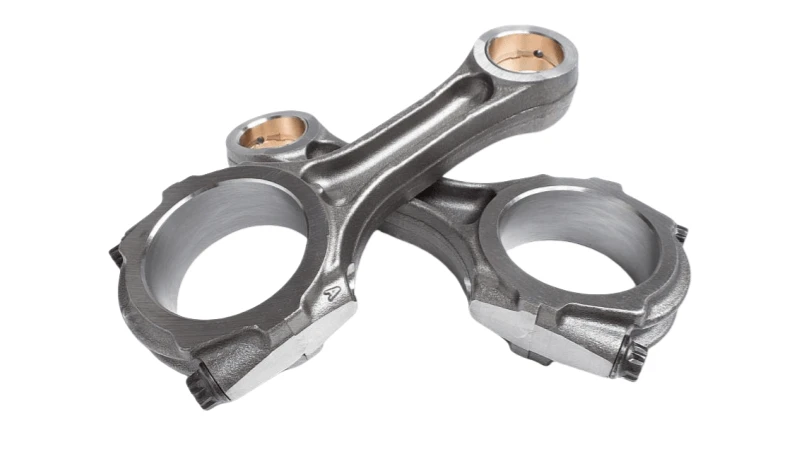
What is a Connecting Rod?
The connecting rod, often referred to as a conrod, is a fundamental component in an internal combustion engine. Its primary role is to connect the piston to the crankshaft. By converting the linear motion of the piston into the rotational motion of the crankshaft, the connecting rod plays a crucial part in the engine's power generation and efficiency.
Location and Function:
- Location: The connecting rod is situated inside the engine block. It attaches to the piston via a piston pin (also known as a gudgeon pin) at one end and to the crankshaft via a crankshaft journal at the other end.
- Function: As the engine's piston moves up and down within the cylinder, the connecting rod transfers this motion to the crankshaft, which then converts it into rotational force to drive the vehicle.
How to Tell if a Connecting Rod is Bad
Detecting a malfunctioning connecting rod can be challenging, but several symptoms can signal potential issues. Here's a detailed guide to help you identify problems:
1. Knocking Noise
- Description: A common sign of a failing connecting rod is a persistent knocking or tapping noise coming from the engine. This noise is typically more pronounced during acceleration or at low RPMs.
- Cause: The noise often results from worn connecting rod bearings or a damaged connecting rod, which can lead to excessive clearance and metal-to-metal contact.
2. Engine Vibration
- Description: If the engine exhibits unusual vibrations or shakes, especially under load or at idle, it could be an indication of a problem with the connecting rod.
- Cause: Excessive play in the connecting rod or imbalances caused by a damaged rod can lead to uneven engine operation and vibrations.
3. Loss of Power
- Description: A noticeable decrease in engine power, poor acceleration, or reduced overall performance may suggest a faulty connecting rod.
- Cause: When a connecting rod is damaged, it can affect the engine's ability to maintain proper compression and combustion, leading to a loss of power.
4. Metal Shavings in Oil
- Description: Inspecting the engine oil for metal shavings or debris can provide clues about connecting rod issues.
- Cause: Worn or damaged connecting rod bearings can generate metal particles that end up in the engine oil, indicating internal wear and potential failure.
5. Engine Misfire
- Description: An engine misfire, where one or more cylinders fail to fire correctly, can be a symptom of a bad connecting rod.
- Cause: A faulty connecting rod can disrupt the piston's movement, causing irregular combustion and leading to engine misfires.
6. Low Oil Pressure
- Description: A significant drop in oil pressure can be a sign of connecting rod problems.
- Cause: Connecting rod issues can lead to increased friction and wear, affecting the oil pressure readings. This is often accompanied by other symptoms.
Diagnosis and Repair
If you suspect a problem with the connecting rod, it is crucial to have a professional mechanic conduct a thorough inspection. Diagnostic steps may include:
- Engine Inspection: A mechanic will perform a visual inspection and use diagnostic tools to check for abnormal sounds and vibrations.
- Oil Analysis: Testing the engine oil for metal particles can confirm the presence of wear.
- Compression Testing: Measuring cylinder compression can help identify if the connecting rod is causing issues with piston movement.
Repair or Replacement:
- Minor Issues: In cases of minor wear, replacing the connecting rod bearings may resolve the problem.
- Major Damage: Severe damage or bending of the connecting rod will likely require a complete replacement of the connecting rod and potentially other related components.
Addressing connecting rod issues promptly is essential to prevent further damage to the engine and ensure reliable vehicle performance.