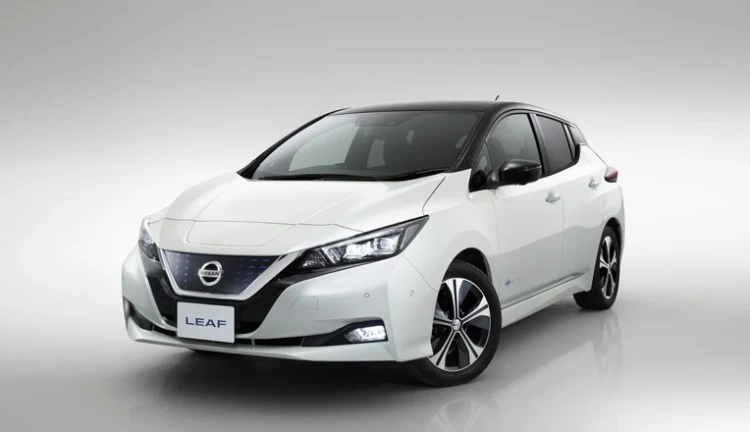
[October 8, 2025 – Tokyo] Nissan Motor Co. has officially announced the launch of its all-new, fully electric Leaf, with pre-orders set to begin on October 17, and deliveries starting in January 2026. This marks the first full redesign of the Leaf in eight years and represents a significant milestone in Japan's rapidly evolving electric vehicle (EV) landscape.
According to Nissan, the new-generation Leaf boasts a maximum driving range of 702 kilometers on a full charge-approximately 50% higher than the previous model-making it the longest-range EV currently available in Japan. The model is priced from 5.19 million yen (around RMB 240,000), reflecting Nissan's commitment to balancing performance, affordability, and environmental responsibility.
Built on Nissan's next-generation EV platform, the new Leaf features a high-density lithium-ion battery and an optimized electric motor, delivering improved energy efficiency and smoother power output. Engineers have refined the vehicle's aerodynamics and adopted lightweight materials, while an upgraded thermal management system ensures stable performance in cold weather and high-speed conditions.
Inside, the cabin embraces a minimalist design, replacing most physical buttons with dual high-definition digital displays. The vehicle is equipped with Nissan's latest ProPILOT advanced driver-assistance system, offering adaptive cruise control, lane keeping, and automatic emergency braking. Continuous OTA software updates will allow drivers to benefit from ongoing performance enhancements and new features over time.
Since its debut in 2010, the Nissan Leaf has become one of the most successful mass-produced EVs in the world, with over 600,000 units sold globally. Known for its reliability and practicality, the Leaf helped shape the early EV market and remains a symbol of Nissan's pioneering role in electric mobility.
Industry experts see the launch of the new Leaf as both a strategic response to intensifying global EV competition and a reaffirmation of Nissan's long-term commitment to electrification. As Tesla, BYD, and other manufacturers race to expand their high-range offerings, Nissan is positioning the Leaf as a practical, high-value alternative for mainstream consumers.
Nissan executives also confirmed that the company will leverage the Leaf's new platform to accelerate the development of upcoming EV models such as the Ariya and Sakura, forming a more complete electric vehicle lineup. The automaker aims to have EVs account for more than 50% of its global sales by 2030, supported by ongoing investment in battery recycling, smart mobility systems, and charging infrastructure.
In essence, the unveiling of the new Leaf is more than just a product launch-it is a statement of intent. As the global auto industry transitions toward intelligent and sustainable mobility, Nissan's latest innovation demonstrates how range, safety, and smart technology can redefine what a family EV stands for in the next decade.