As the global automotive industry undergoes a rapid transition toward electrification and intelligent mobility, Japanese automakers are stepping up their efforts to realign strategies and adapt to an increasingly competitive market. In recent developments, Mitsubishi, Nissan, and Mazda have each announced key initiatives-ranging from EV collaborations and charging standard integration to production restructuring-highlighting their evolving approaches to the next era of mobility.
Mitsubishi Motors recently revealed plans to launch a new all-electric model for the North American market in the second half of 2026. The vehicle will be built on Nissan's next-generation LEAF platform and manufactured by Mitsubishi. Positioned for younger families, the new model will combine Nissan's expertise in electric drivetrains with Mitsubishi's SUV manufacturing experience. According to Mitsubishi Motors North America CEO Mark Chaffin, the vehicle is expected to feature a 72kWh battery with an estimated EPA range of 400 kilometers and support for 150kW fast charging. This initiative marks the first concrete step in Mitsubishi's "2030 U.S. Market Strategy" and will be produced at the company's Illinois facility with an initial annual production target of 50,000 units.
In parallel, Mazda has taken a significant step in enhancing EV user convenience. The company announced it has reached an agreement with Tesla to adopt the North American Charging Standard (NACS) for its electric models in Japan starting in 2027. This will allow Mazda EV owners to access Tesla's Supercharger network within Japan. This move follows Mazda's earlier decision in 2024 to integrate NACS in its U.S. models beginning in 2025. Although Mazda's current EV lineup remains limited-its only model, the MX-30, exited the U.S. market in mid-2023-the adoption of NACS indicates a forward-looking strategy to align with widely accepted charging infrastructure.
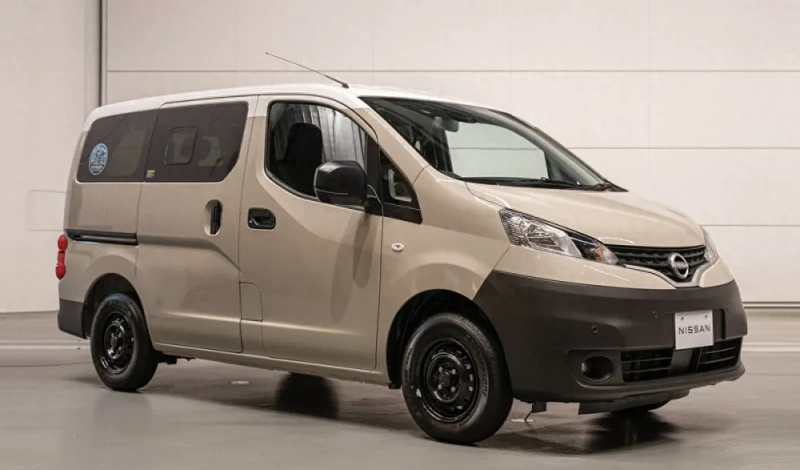
Meanwhile, Nissan is reportedly considering discontinuing production of the NV200 VANETTE commercial vehicle at its subsidiary Nissan Shatai's Shonan plant in Hiratsuka, Kanagawa Prefecture. Due to sluggish sales and a shift in product focus, Nissan does not plan to relocate production of the model and is also exploring the possibility of closing the Shonan facility. Employees affected by the potential shutdown may be transferred to Nissan Shatai Kyushu in Fukuoka Prefecture, where they could be involved in building the high-demand Patrol SUV for Middle Eastern markets, as well as the next-generation Elgrand MPV, slated for release in fiscal 2026. These changes reflect Nissan's strategy to prioritize high-margin vehicles and streamline manufacturing resources.
Industry analysts note that Japanese automakers are increasingly embracing structural adjustments to remain competitive in the evolving EV landscape. The Mitsubishi-Nissan partnership underscores the value of alliance-based synergy, while Mazda's adoption of NACS reflects a growing emphasis on user-friendly charging solutions. Nissan's decision to phase out underperforming commercial models further illustrates a strategic shift toward higher-value product lines.
With global momentum building behind electrification-fueled by policy support, technological advances, and rising consumer interest-Japanese brands are actively reconfiguring their operations to secure a foothold in the new energy vehicle market. How effectively these legacy players adapt will shape their competitiveness in the years to come.