

Hey there! As a supplier of arm rubber bushings, I've seen firsthand how the hardness of these little components can make a huge difference in their performance. So, let's dive into how the hardness of an arm rubber bushing affects its performance.
What's Arm Rubber Bushing Hardness Anyway?
First off, hardness in arm rubber bushings is all about how stiff or soft the rubber material is. It's usually measured on the Shore scale. A lower Shore hardness number means the rubber is softer, while a higher number indicates a harder rubber. Think of it like comparing a marshmallow (soft) to a hockey puck (hard).
Impact on Vibration Isolation
One of the key jobs of an arm rubber bushing is to isolate vibrations. Soft bushings, with a lower hardness, are great at this. They can absorb and dampen vibrations from the road, engine, and other sources. When your vehicle hits a bump, the soft rubber compresses easily, reducing the jolts that make their way into the cabin. This leads to a smoother and more comfortable ride for you and your passengers.
For example, if you're driving a luxury sedan, you'd want softer bushings to give that plush, quiet ride. The soft rubber acts like a cushion, soaking up all the little vibrations so you hardly feel a thing. On the other hand, if the bushings are too hard, those vibrations will pass right through, making your ride feel rough and noisy.
Handling and Stability
Now, let's talk about handling. Harder bushings offer better handling and stability. When you take a sharp turn, the harder rubber resists deformation more effectively. This means the suspension components stay in place and do their job of keeping the wheels in contact with the road.
In a sports car or a high - performance vehicle, harder bushings are often preferred. They allow for more precise steering and better control during aggressive driving. You can feel more connected to the road, and the car responds more quickly to your steering inputs. But if the bushings are too soft, the suspension can flex too much, causing a delay in the vehicle's response and reducing overall handling performance.
Durability and Wear
The hardness of the bushing also affects its durability. Harder rubber has a longer lifespan in general. It can withstand more wear and tear, especially in harsh driving conditions. For vehicles that are used for heavy - duty work, like trucks or off - road vehicles, harder bushings are a better choice. They can handle the constant stress and abuse without wearing out quickly.
Soft bushings, however, are more prone to damage. They can be easily cut, torn, or compressed over time, especially if they're exposed to sharp objects or extreme loads. So, if you're using your vehicle in a less demanding environment, like daily city driving, soft bushings might be okay. But for tough jobs, go for the harder ones.
Compatibility with Vehicle Design
Vehicle manufacturers design their suspension systems with specific bushing hardness in mind. When you're replacing arm rubber bushings, it's crucial to choose the right hardness that matches your vehicle's design.
For instance, if you own a 48725 - 350020 Bush, Suspension For TOYOTA Land Cruiser Prado 120/150, Hilux Surf, FJ Cruiser, 4 Runner, the original equipment manufacturer (OEM) has determined the optimal bushing hardness for that particular model. Using a bushing with the wrong hardness can throw off the entire suspension balance, leading to poor performance and even potential safety issues.
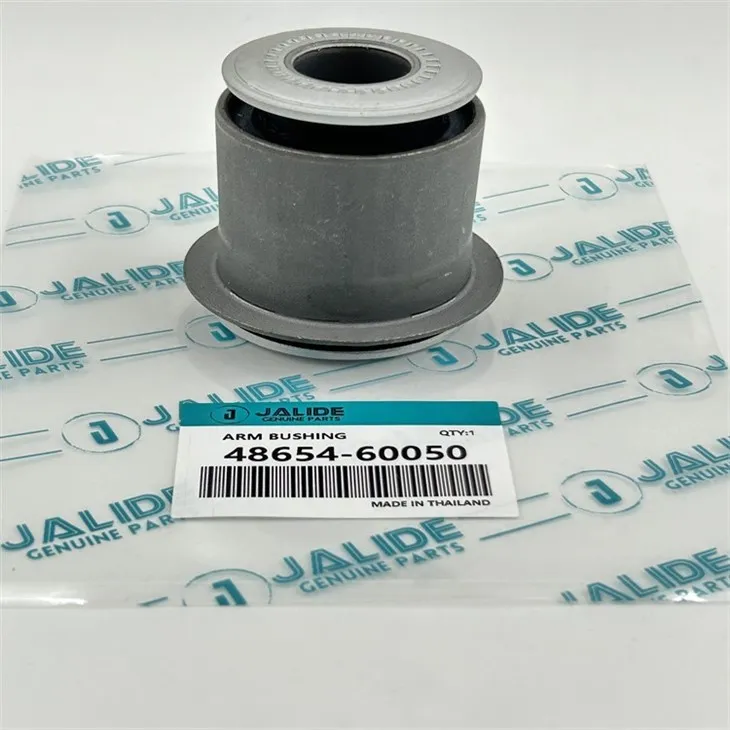
Similarly, for a 48702 - 60110 Bushing, Suspension For Toyota Land Cruiser 100, Sequoia, LEXUS LX470, the hardness is engineered to work in harmony with the vehicle's suspension geometry. And for a 48654 - 60050 TOYOTA Bush, Suspension For 4 Runner, FJ Cruiser, Land Cruiser Prado 150, getting the correct hardness is essential for maintaining the intended performance.

Finding the Right Balance
As a supplier, I often get asked how to find the perfect hardness for a bushing. Well, it's all about finding a balance between comfort, handling, and durability. If you're a daily commuter who values a smooth ride, you might lean towards softer bushings. But if you're a performance enthusiast or use your vehicle for heavy - duty tasks, harder bushings are the way to go.
It's also a good idea to consult with a mechanic or someone who knows your vehicle well. They can give you advice based on your driving style and the specific requirements of your vehicle.
Contact Us for Your Bushing Needs
If you're in the market for arm rubber bushings, we've got you covered. We offer a wide range of bushings with different hardness levels to suit various vehicles and driving needs. Whether you're looking for a softer bushing for a comfortable ride or a harder one for high - performance driving, we can help.
Just reach out to us, and our team will be happy to assist you in finding the right bushings for your vehicle. We're committed to providing high - quality products that meet your standards and keep your vehicle running smoothly.
References
- Smith, J. "The Science of Rubber Bushing Hardness." Automotive Engineering Journal, 2018.
- Johnson, M. "Suspension Bushing Performance and Hardness." Vehicle Dynamics Magazine, 2020.