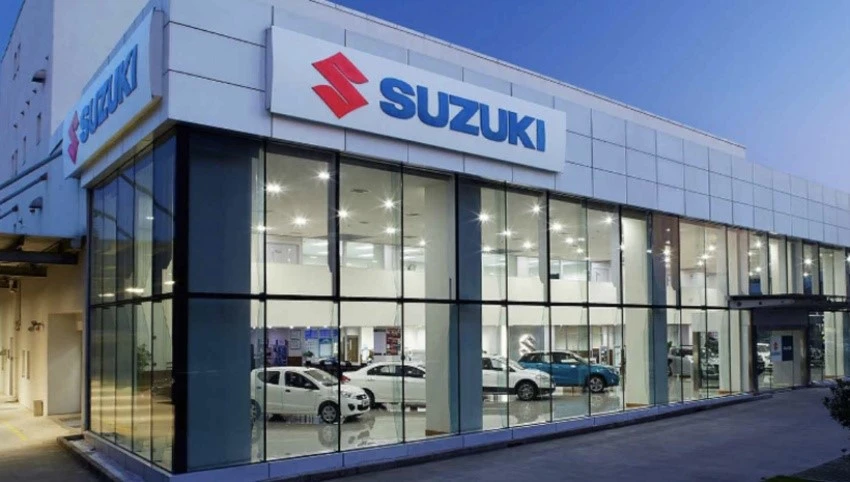
According to the latest data from the Japan Automobile Importers Association, Suzuki Motor Corporation emerged as Japan's top automobile importer in June 2025, surpassing Mercedes-Benz Group. The surge was driven by strong demand for the India-produced five-door Jimny Nomad and another compact SUV, the Fronx.
Suzuki imported 4,780 vehicles into the Japanese market during the month, marking an astonishing 229-fold increase compared to the same period last year. This is the second time Suzuki has claimed the top spot this year, following a similar achievement in April.
As one of the smaller global automakers by production volume, Suzuki's performance is particularly noteworthy, especially in a domestic market traditionally dominated by giants like Toyota. The milestone also comes at a time when automotive imports are back in the spotlight amid renewed trade pressure from former U.S. President Donald Trump, who has called on Japan to increase imports of U.S.-made vehicles.
The Jimny Nomad, a long-wheelbase, five-door version of Suzuki's popular Jimny, has seen remarkable success since its introduction. Priced from ¥2.65 million (approximately USD 18,300), the vehicle garnered nearly 50,000 pre-orders before its official April launch-far exceeding Suzuki's initial monthly sales target of 1,200 units. The overwhelming demand led Suzuki to halt new orders just four days after opening.
To meet soaring demand, Suzuki plans to ramp up Jimny Nomad production in India starting in July, which is expected to significantly increase shipments to Japan. The automaker also began importing the India-built Fronx to Japan in October 2024. With decades of vehicle and motorcycle production experience in India and access to low labor and manufacturing costs, Suzuki's Indian operations are becoming a critical pillar of its global strategy.
Looking ahead, Suzuki projects that India's annual car sales will reach 20 million units by 2047. Its Indian subsidiary, Maruti Suzuki, aims to capture 50% of the domestic market share by 2030.
Honda Motor Co. has also performed strongly with its India-produced WR-V compact SUV. Launched in March 2024 at a starting price of ¥2.1 million, the WR-V has been well received for its cost-performance balance. Honda's imported vehicle registrations in Japan surged 21-fold in 2024 to 45,107 units, making it the leading importer in Q1 2025.
For the first half of 2025, Mercedes-Benz maintained the top spot with 25,016 vehicles, followed by Honda with approximately 22,000 units. Suzuki ranked third, while Nissan secured the ninth position with its Thailand-built Kicks crossover.
Meanwhile, Jeep-part of the Stellantis Group-also posted solid performance in the Japanese market. The American SUV brand sold over 4,000 units during the first half of the year, outperforming traditional U.S. rivals General Motors and Ford.
Takeshi Miyao, an analyst at consulting firm Carnorama, noted, "Japanese consumers don't necessarily care whether a vehicle is made in Thailand, India, or domestically-as long as it meets their preferences." He added that U.S. automakers like GM and Ford have failed to gain traction in Japan because they haven't offered models aligned with local consumer demand, such as compact and kei cars.
Amid a shifting global trade landscape, Japanese automakers are reshaping the dynamics of their domestic import market through strategic overseas production and competitive product offerings. The growing role of Indian manufacturing in the success of brands like Suzuki and Honda highlights the increasing globalization of Japan's automotive sector.